

A great Homecoming dance doesn’t happen by accident. It happens because someone puts in the planning, the creativity, and the care to make it unforgettable. For the school staff, student council advisors, and parent volunteers who take on that responsibility, this guide covers everything you need to plan a Homecoming dance: from choosing a theme and setting a budget to day-of coordination and everything in between. Whether you’re planning your first Homecoming dance or your fifteenth, here’s how to make this one the best yet.
Choose the Right Homecoming Dance Theme

The right theme sets the entire tone of the night — the decorations, the music, the atmosphere, and the memories students take home with them. Start here, and everything else becomes easier to plan.
Involve students early. Use a simple online survey (Anderson’s PromUs works great) to let the student body vote on their top choices. Survey early — ideally 8–10 weeks before the dance — so the winning theme has time to fully shape your planning decisions. Students who have a voice in the theme are students who show up excited to experience it.
Here are some popular Homecoming dance theme ideas to consider:
| Theme | Vibe | What Makes It Work |
| Masquerade Ball | Elegant, mysterious | Deep jewel tones, masks, candlelight |
| Starry Night / Celestial | Dreamy, romantic | Navy, gold, string lights, star cutouts |
| Hollywood Glamour | Bold, high-energy | Red carpet, spotlights, gold accents |
| Enchanted Garden | Whimsical, lush | Greenery, florals, fairy lights |
| Under the Sea | Fun, colorful | Blues, purples, shimmer, sea props |
| Retro / Decades | Nostalgic, playful | Era-specific colors and patterns |
| Great Gatsby / 1920s | Sophisticated | Black, gold, art deco details |
| Casino Night | Exciting, sleek | Playing card motifs, bold colors |
A few decoration tips worth keeping in mind: coordinate with Spirit Week for a cohesive week-long experience, choose something visually strong (the best themes photograph beautifully and generate social media buzz), and always keep execution in mind. A Starry Night theme can be achieved with string lights and dark tablecloths; a Hollywood theme may require more elaborate props.
Set a Homecoming Dance Budget
A realistic budget is the backbone of every successful Homecoming dance. Build it carefully, track it consistently, and protect it with a contingency buffer.
| Category | What It Covers |
| Venue | Rental fee, setup/teardown, security deposit |
| Decorations | Table décor, balloons, backdrops, lighting |
| Entertainment | DJ or live band fee, sound equipment |
| Refreshments | Food, beverages, serving supplies |
| Photography | Photographer fee, photo booth setup/rental |
| Royalty accessories | Crowns, tiaras, sashes, scepters |
| Printing | Tickets, programs, promotional signage |
| Security | Campus security or contracted personnel |
| Contingency fund | 10–15% of total budget for surprises |
Use past event budgets as a starting point, but account for inflation and any new features you’re adding. Explore multiple funding sources — ticket sales, PTA support, and local business sponsorships can all supplement your school allotment. Platforms like Anderson’s PromUs include built-in budgeting tools designed specifically for school event planning, making it easier to organize, fundraise, and stay on track.
Pro tip: Nothing derails a Homecoming dance planning process faster than unexpected costs. Create a line item for everything — including cleanup supplies, extension cords, and vendor gratuities — before you start spending.
Choose a Venue and Set the Date
Smart scheduling and the right venue are two of the most foundational decisions in the entire Homecoming dance planning process.
When choosing a date, work around your school calendar, sports schedule, and standardized testing dates. Confirm early with administration — calendar holds fill up fast.
On-campus gyms and auditoriums are often the smartest venue choice — familiar, budget-friendly, and easy to supervise. With the right lighting and decorations, any space can be transformed into something spectacular. Key questions to ask during venue evaluation:
- Is the capacity appropriate for your expected attendance?
- Is the space accessible for students with disabilities?
- Does it have adequate parking and restroom access?
- Is there sufficient electrical capacity for DJ equipment and lighting?
- Is the venue available for setup the day before or morning of the event?
For layout, designate clear zones: dance floor, refreshments, photo booth, seating, and entry/exit points. Ensure clear sightlines for chaperones and keep the entrance well-lit and staffed at all times.
Homecoming Dance Entertainment: Music, Photo Booths, and More
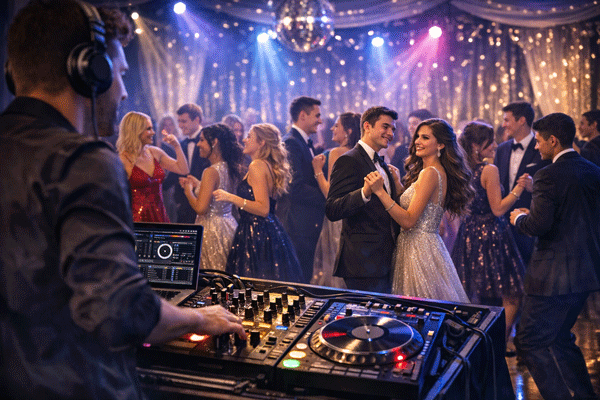
Great entertainment is what transforms a well-decorated gym into a night students talk about for years.
DJ: More budget-friendly and flexible, a DJ can take live song requests and read the room in real time — the better choice for most high school Homecoming dances.
Live Band: Creates a unique, high-energy atmosphere, but typically costs more and requires additional stage and power setup. A great option for schools with a strong music culture or a larger budget.
Whichever you choose, meet with your entertainer beforehand to discuss the playlist, volume levels, any restricted songs, and the timeline for the night.
Beyond music, consider these additions:
- Photo booth — A simple backdrop, themed props, and good lighting create shareable moments. A DIY setup can be just as effective as an expensive rental.
- Digital photo wall — Display real-time event uploads on a large screen to keep excitement high all night.
- Dance-offs or group dances — Build in 1–2 organized moments to keep energy from dipping mid-event.
- Royalty crowning ceremony — Plan this strategically, typically at halftime, when the crowd is gathered and energy is naturally high.
Food and Refreshments
Food keeps the energy up and the mood positive throughout the night. You don’t need an elaborate spread — you need thoughtful choices that work for your crowd and your budget.
| Format | Best For | Budget Level |
| Buffet | Larger events with sit-down time | Moderate |
| Snack stations | Events focused on dancing, not dining | Budget-friendly |
| Dessert bar | Adding a fun, themed visual element | Low to moderate |
| Potluck (parent volunteers) | Tight budgets with strong parent support | Very budget-friendly |
Always ask for dietary needs in advance; include a question on your ticket registration form for allergies, vegan, vegetarian, and gluten-free requirements. Label everything clearly at the food table, prioritize hydration, and plan for volume. High schoolers at a dance eat more than you’d expect. Small theme-adjacent touches, like themed drink names or colored napkins matching your theme, add nice visual cohesion to the refreshments table.
Plan a Homecoming Dance That is Safe and Secure
A safe Homecoming dance is a successful one. Strong safety planning protects your students, your staff, and the integrity of the entire event.
Before the event:
- Collaborate with local police or campus security to establish appropriate protocols
- Create a written behavior policy covering dress code, entry/exit procedures, and conduct expectations
- Designate a first aid station and confirm at least one staff member with first aid certification
- Conduct a full venue walkthrough with your safety team to identify potential blind spots
During the event:
- Make all chaperones easily identifiable (matching lanyards or staff shirts work well)
- Hold a pre-event briefing covering specific zones, intervention protocols, and escalation contacts
- Implement a clear entry procedure: ticket check, dress code confirmation, and a no-reentry policy
- Keep walkie-talkies or a group text active among all staff
Post emergency exit routes visibly throughout the venue and confirm emergency protocols are shared with all staff before the event begins.
Promote Your Homecoming Dance

Even the best-planned event needs strong promotion to fill the room. Start early, use every available channel, and let students help carry the message.
Promotion timeline:
- 6–8 weeks out: Announce the date, theme reveal, and ticket sale launch
- 4–5 weeks out: Theme sneak peeks, decoration previews, and early-bird ticket incentives
- 2–3 weeks out: Countdown posts, royalty spotlight content, behind-the-scenes planning moments
- 1 week out: Final ticket push, logistics reminders (dress code, arrival time, entry procedures)
- Day of: Hype posts and real-time setup updates
Use morning announcements, hallway posters, school social media accounts (Instagram, TikTok), student group chats, and parent communication platforms. Student-generated content almost always outperforms official school announcements. Encourage students to share behind-the-scenes videos, outfit reveals, and countdown posts using your event hashtag. The more students feel ownership over the event, the more they’ll show up — and bring their friends.
Your Homecoming Dance Planning Checklist: Day-Of Coordination
The day of the Homecoming dance is all about execution. With clear roles, a master checklist, and a designated point person, everything runs smoothly.
Morning of the event:
- Confirm arrival times with all vendors (DJ, caterer, photographer, security)
- Share the day’s timeline with all staff and volunteers
- Do a full venue walkthrough to identify any setup issues
Setup phase:
- Assign decoration teams to specific zones
- Test all audio/visual equipment before students arrive
- Set up the photo booth, refreshments area, and royalty stage
- Brief all chaperones on their zones, protocols, and contact chain
During the event:
- Designate one “event lead” with full authority to make real-time calls
- Monitor crowd levels, refreshment supplies, and energy throughout the night
- Execute planned special moments at pre-scheduled times
Wrap-up:
- Complete a post-event debrief with key staff while details are fresh
- Document what worked, what didn’t, and what to adjust for next year
Make This Homecoming Dance One to Remember
Homecoming dances are more than a night out; they’re a tradition that shapes school culture, builds community, and creates memories students carry with them long after graduation. When you plan with intention, involve your students, and give every detail the attention it deserves, the result is a night the whole school will be talking about.
Start early, stay organized, and enjoy the process, because the energy you put into planning shows up on the dance floor.
Explore Homecoming dance decorations, royalty accessories, photo booth supplies, and more at andersons.com to find everything you need to bring your theme to life.
Frequently Asked Questions
How far in advance should you start planning a Homecoming dance?
Start planning at least 8–10 weeks before the event. This gives you enough time to secure a venue, book vendors, build your budget, involve students in theme selection, and promote the event effectively without last-minute scrambling.
How much does it cost to plan a high school Homecoming dance?
Costs vary widely depending on school size and location, but most high school Homecoming dances cost between $3,000 and $15,000 to plan. Per-student costs typically range from $20–$60 depending on the venue, entertainment, and refreshments included.
Should you hire a DJ or a live band for a Homecoming dance?
For most high school Homecoming dances, a DJ is the better choice — more flexible, more budget-friendly, and better able to respond to the crowd in real time. A live band can be a great option for schools with a larger budget or a strong music culture.
How do you keep students engaged throughout the Homecoming dance?
Plan strategic high-energy moments throughout the night — including a royalty crowning ceremony, a group dance or dance-off, and a photo booth. Avoid long lulls between planned moments, and work with your DJ to read and respond to the crowd’s energy.
What’s the most important thing to include in a Homecoming dance planning checklist?
Your Homecoming dance planning checklist should include: venue confirmation, vendor contracts, budget tracking, student involvement plan, safety and chaperone protocols, a promotion timeline, and a day-of coordination schedule with assigned roles for every staff member.